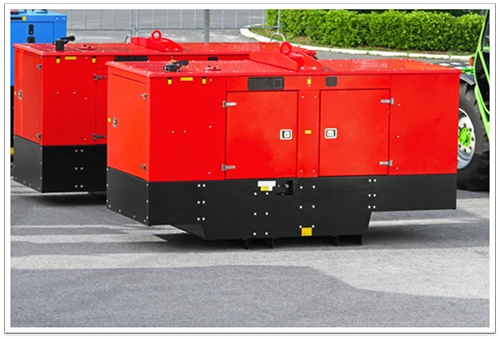
In the high-stakes world of industrial energy, there is a massive chasm between a "backup" power source and a "continuous" prime mover. Most consumer-grade electronics are designed for intermittent bursts of activity, but in sectors like mining, large-scale agriculture, and telecommunications, the grid is often non-existent or notoriously unreliable. This requires a machine that doesn't just wait for an emergency, but thrives under a permanent load. The engineering of these units is a masterclass in thermal management and material science. To get a handle on the high-torque iron currently setting the standard for 2026 site operations, you can dive into the technical benchmarks at https://ablepower.com.au/ to see how modern sets are balanced for indefinite run-times without the risk of mechanical fatigue.
The Metallurgy of Endurance: Low RPM and High Torque
The first reason a diesel set outlasts a petrol equivalent by thousands of hours is the fundamental speed of the operation. A standard petrol engine usually screams along at 3,000 to 3,600 RPM to generate its peak power. This high speed leads to rapid frictional wear and massive heat spikes. In contrast, a professional-grade diesel generator is a "slow-speed" beast, typically governed at 1,500 RPM (for 50Hz output).
Reduced Piston Speed: Because the pistons move slower, the "linear distance" traveled by the rings against the cylinder walls is significantly lower over the life of the machine.
Compression Ignition: Diesel engines use heat from compression rather than spark plugs. This requires a much beefier engine block—usually heavy-duty cast iron—which can absorb and dissipate vibration much more effectively than thin-walled aluminum alternatives.
Thermal Equilibrium: The War Against "Heat Soak"
Continuous operation isn't about how much power a machine can make; it’s about how much heat it can throw away. If an engine cannot reach "thermal equilibrium"—where the heat generated is perfectly balanced by the heat rejected—the oil will eventually shear and the bearings will seize. Over-sized Cooling Packages: Generators built for the long haul feature radiators that are significantly larger than what you’d find in a truck with the same horsepower. Thermostatic Precision: These units utilize advanced thermostats that keep the coolant at a rock-steady temperature. This prevents the "thermal cycling" (expansion and contraction) that causes head gaskets to fail and seals to weep. When an engine runs at a constant temperature for 24 hours, the metal remains in its expanded state, reducing the stress that comes from the constant cooling and reheating found in intermittent-duty machines.
The Alternator: 2/3 Pitch and Class H Insulation
The engine provides the muscle, but the alternator handles the electrical stress of continuous duty. Running a load for 10 minutes is easy; running a 100% load for 10 days straight creates a massive magnetic and thermal buildup in the copper windings.
Class H Insulation: This is the gold standard for 2026. It allows the internal windings to operate at temperatures up to 180°C without the resin melting or the wires short-circuiting.
2/3 Pitch Windings: In a continuous-run scenario, "dirty" power (harmonic distortion) can cause motors in your building to run hot. A 2/3 pitch design physically cancels out the most damaging harmonics, ensuring that the sine wave remains "clean" even after days of operation.
Fuel as a Lubricant: The Diesel Advantage
One of the "secret" reasons diesel engines survive continuous operation is the fuel itself. Petrol is a solvent; it strips oil away from the cylinder walls. Diesel, however, is a light oil. As it is injected into the chamber, it actually provides a level of upper-cylinder lubrication.
Furthermore, modern high-pressure common rail (HPCR) systems in 2026 use electronic injectors that can fire multiple times per stroke. This "pilot injection" softens the combustion "knock," reducing the shock loading on the crankshaft and connecting rod bearings. This allows for a smoother, quieter operation that translates directly into a longer mechanical lifespan.
Managing the "Wet Stacking" Risk
Continuous operation doesn't always mean running at 100% load. One of the biggest operational hurdles for long-term power is "underloading." If a large diesel set runs at less than 30% load for days, it never reaches the internal temperature needed to burn the fuel completely.
This leads to Wet Stacking—a thick, tar-like buildup in the exhaust. Continuous-duty machines are often paired with Automatic Load Banks. If the facility’s demand drops too low, the system automatically introduces a "dummy load" to keep the engine hot. This ensures the rings stay seated and the exhaust remains clean, even during low-demand periods at night.
Maintenance on the Fly: The "Service-Ready" Design
A machine built for continuous work is designed for maintenance without a total shutdown where possible.
Oil Sump Capacity: Continuous-duty engines often have larger oil pans. More oil means the additives don't deplete as quickly and the lubricant stays cleaner for longer.
Bypass Filtration: Many high-spec sets use secondary "kidney loop" filters that can clean the oil to a finer micron level than the standard full-flow filter, extending service intervals from 250 hours to 500 or even 1,000 hours.
The Strategic Value of "Firm" Power
In the current energy landscape, "Firm" power is the ultimate commodity. While solar and wind are excellent for reducing fuel costs, they cannot provide the constant, high-inertia torque required by industrial crushers, deep-well pumps, or data centers.
A diesel generator is a self-contained power plant. By investing in a unit built for continuous duty, a business is effectively "buying their own grid." They gain the ability to operate independently of utility price spikes, grid instability, or remote location constraints.
Conclusion: Iron That Doesn't Quit
Continuous operation isn't an accident of design; it is the result of specific metallurgical choices, over-engineered cooling systems, and slow-speed mechanical logic. A diesel generator is built to be a workhorse, not a show pony. When the oil is kept clean, the fuel is filtered, and the load is managed, these machines represent the most reliable form of energy on the planet.
Whether you are "islanding" a remote site or protecting a critical process, the heavy iron of a diesel set provides the one thing the grid cannot always guarantee: Certainty.